POSITECH ENERGY
Shropshire, UK · 52.6°N
Subsidy-free solar · live & generating

A solar farm, built and paid for in the open.

One 1.2 megawatt array on a Shropshire sheep farm — and the real financials almost no one else will publish.
1.2MWp
Installed
3,024
Panels
£175.5k
Year-one income
5.98%
Return
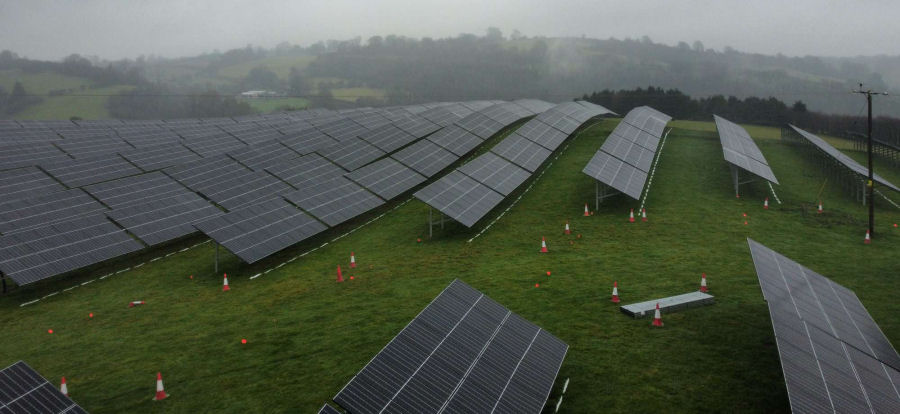
Rows of installed solar panels on a misty morning in a Shropshire field, awaiting removal of an overhead power line.

The renders are tidy. The field is muddy, hilly, and took nearly four years.

Positech Energy — owned & run by Cliff Harris

The company

Small-scale solar, run by someone who built it himself.

Positech Energy was formed in March 2021 as a UK limited company with a single aim: to develop solar generation in Britain. It's owned and run by Cliff Harris — a long-time environmentalist who also created and runs Positech Games, the independent studio behind titles like Gratuitous Space Battles and Democracy.

The first development is a 1.2 MWp array in Shropshire. Planning permission came through in October 2022; after a construction saga measured in years and emails, the site is now live and feeding the grid. It sits on a working sheep farm, and the sheep never had to leave.

The point of this site is simple. Profit was never the prime motivation — doing something real about the climate emergency was. But the farm is profitable, and almost no solar operator will show you their actual books. This one will.

First full year · 2025

Here are the numbers. All of them.

Hardly any solar farm shares its real financial data. This is our complete first full year of operation — income in, every cost out, and what was left.

Solar farm financials2025
Total income£175,500
Repairs−£9,600
Energy imports−£6,350
Rent−£6,100
Accountancy−£1,200
Telecoms−£1,000
Sundries−£875
Gross profit£150,000
Depreciation−£60,200
Net profit£90,000
Return on investment
5.98%

A subsidy-free small solar farm doesn't make anyone rich. It quietly generates clean power, holds its value, and pays a steady real-world return — no feed-in tariff, no government backing.

"Our first solar farm is profitable — though that was never why we built it."

The hardware

1.2 megawatts of kit, on a field that isn't flat.

3,024
Solar panels
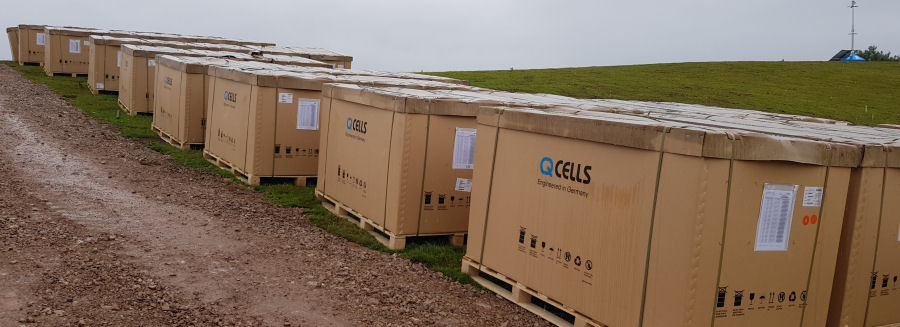
410W monocrystalline modules from Q-Cells, split into short stepped runs to follow the sloping ground.
10×
Solis inverters
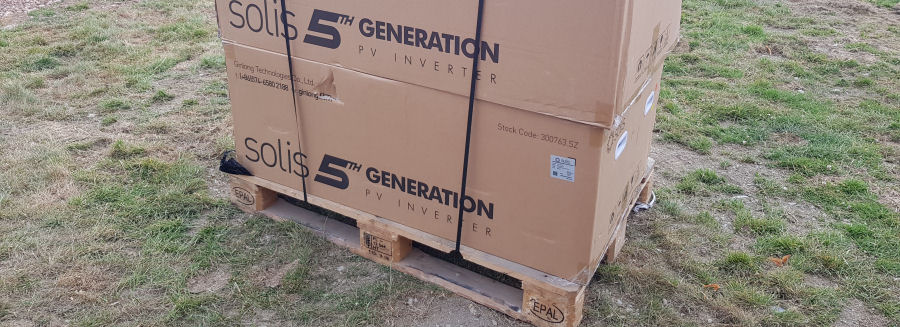
Chunky 80–110kW units converting the array's DC into grid-ready AC.
900kWp
Grid connection
The link to the network that took a year and hundreds of emails to finally energise.
1×
Transformer substation
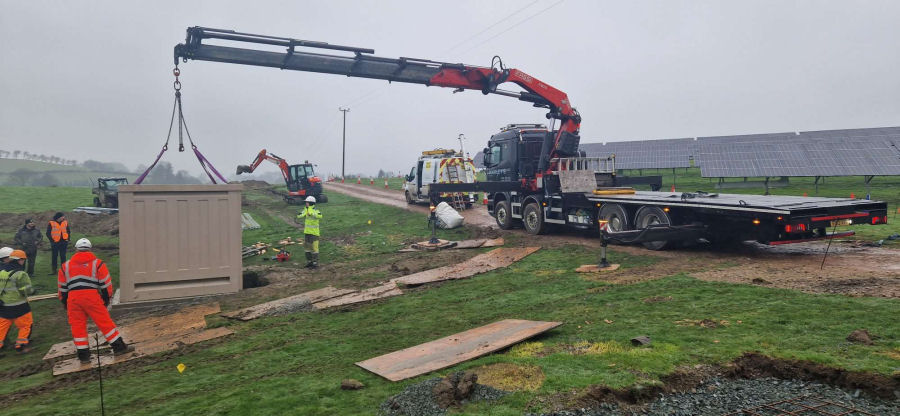
Lifted into place on site to step the farm's output up to grid voltage.
Why solar

Why solar, and not something grander.

At the scale a small company can actually operate, the choice makes itself.

01

Planning is achievable

Consent for solar in the UK is far more attainable than for wind — the difference between a project that happens and one that doesn't.

02

The economics scale down

Tidal, wind and geothermal need enormous capital. Solar works at a size one determined person can finance and build.

03

Nearly maintenance-free

No moving parts to speak of. Panels sit in the sun; sheep keep the grass down. That's most of the operating plan.

04

A genuinely free market

As of 2026 UK solar is entirely subsidy-free — unlike nuclear, it stands on its own in an open market with no state backing.

The build · 2023–2024

Posts in the ground to power on the grid.

From the first mounting posts to the moment an inverter finally showed a live grid connection — after almost four years of trying.
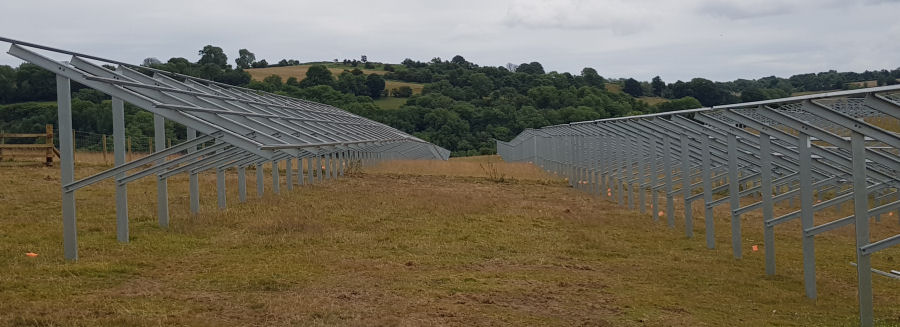
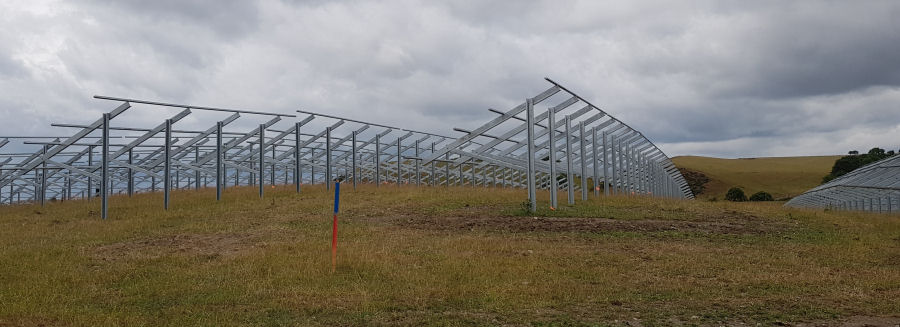
Completed steel mounting frames across a field, ready for solar panels.
FramesFull mounting frames built and waiting — the skeleton of the whole farm before a single panel goes on.
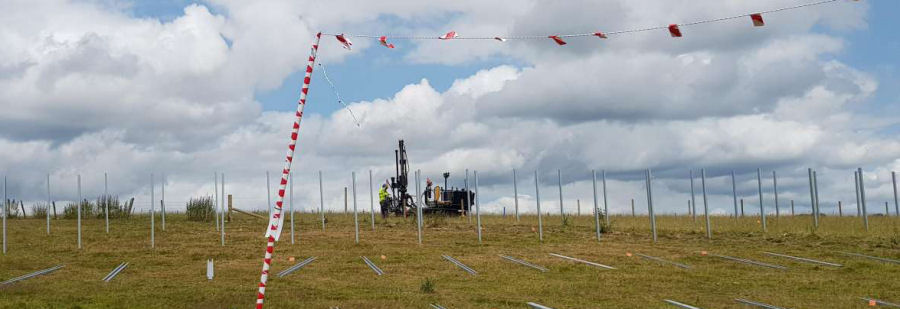
A machine driving steel piles into the ground for panel foundations.
FoundationsPile driving the foundations — every frame anchored into Shropshire ground.
Solar mounting frames stepped in short runs across a sloping, uneven field.
The slopeThe field is not flat. Panels run in short stepped rows to follow the hill.
Stacked pallets of thousands of solar panels delivered to site.
DeliveryAll 3,024 panels on site. A photo of pallets can't quite convey how many that is.
Large Solis inverter units delivered and waiting to be fitted.
InvertersThe big Solis inverters arrive — 80 to 110kW apiece, ready to be fitted.
A crane lifting a transformer substation unit into place on site.
SubstationLifting the transformer substation into position — the farm's link to grid voltage.
A section of overhead power cable that delayed the grid connection.
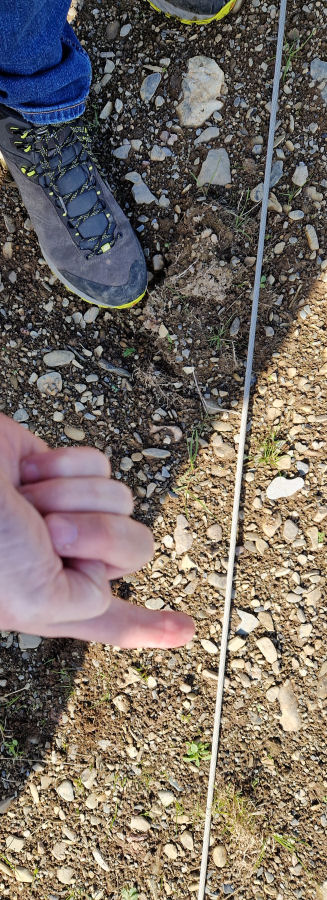
The cableThis unremarkable little cable delayed the whole connection by a year — and hundreds of emails.
A monitoring readout showing the first evidence of an inverter connected to the grid.
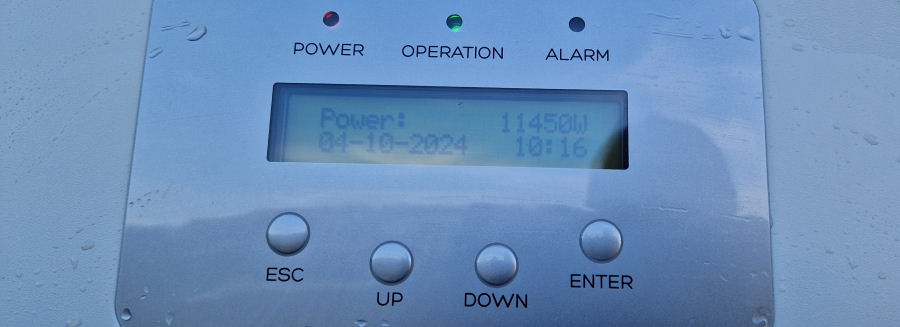
EnergisedThe very first sign that an inverter was live on the grid — after almost four years of trying to make it happen.
Land that stays working

The sheep never had to leave.

The site sits on a working sheep farm that keeps full access to the land for the farm's entire lifetime. The flock grazes happily between the rows — keeping the grass down, keeping the field in agriculture, and doing the mowing for free.

From the blog

The whole build, written up as it happened.

Cliff blogs the development in detail — the real process of getting a solar farm built in the UK, delays and all.